Nov – March · Aransas NWR & Lamar Peninsula
Whooping Cranes
The Aransas-Wood Buffalo flock — the world’s only naturally self-sustaining wild migratory whooping crane population — spends its winters right here, on the tide flats, marshes, and even the roads of Aransas County. This is one of the greatest wildlife conservation stories of the 20th century, and you can witness it firsthand.
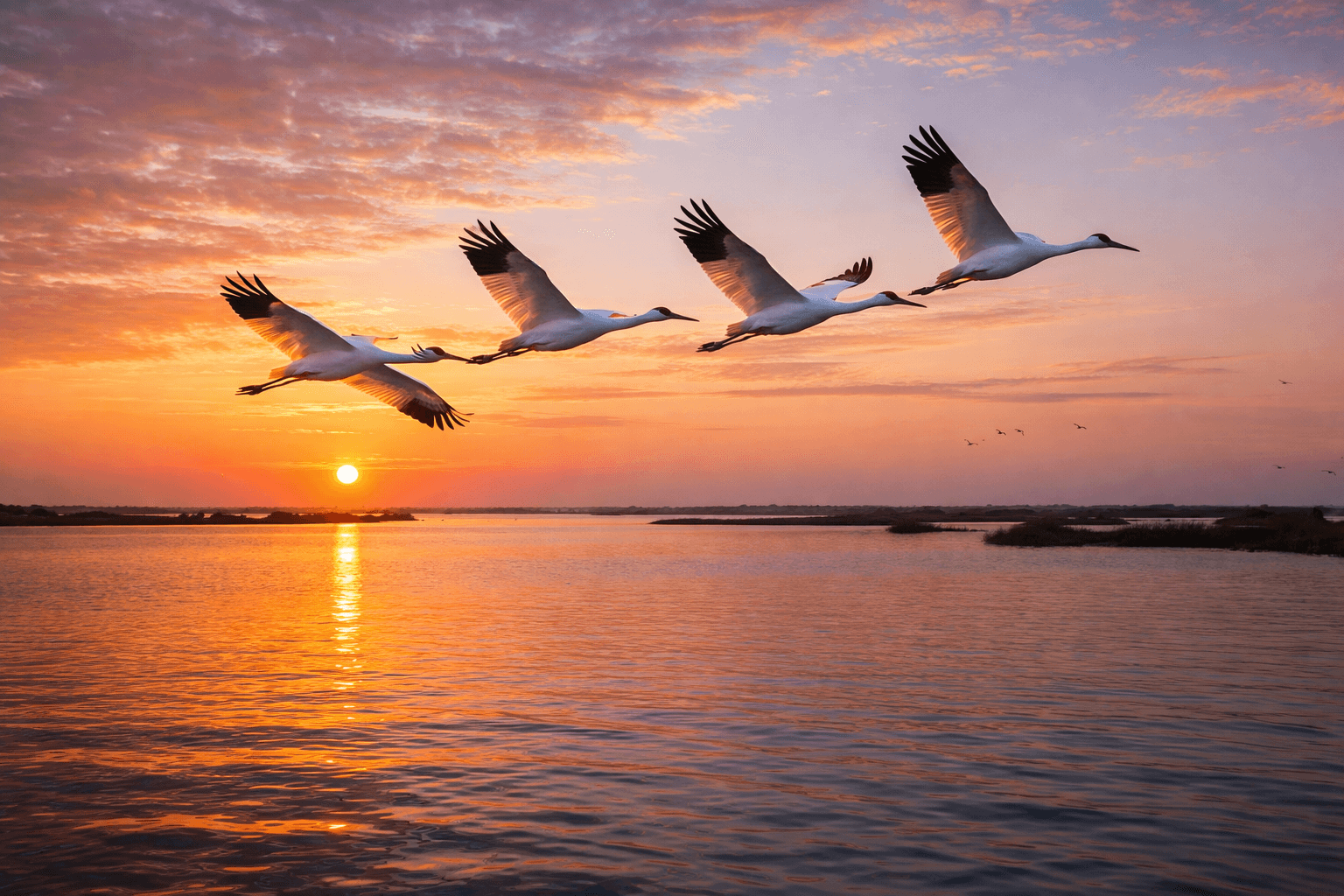
The Story of the Whooping Crane
In 1941, there were only 15 whooping cranes left on Earth. Fifteen. The species had been hunted, poisoned, and habitat-stripped to the edge of extinction. The flock that wintered at Aransas was all that remained.
Today, thanks to one of the most intensive conservation efforts in American history — captive breeding programs, protected migration corridors, and the fierce protection of Aransas National Wildlife Refuge — that same flock has grown to over 560 birds. They are still considered Endangered, but they are here, and they are breeding, and every November they fly back down from Wood Buffalo National Park in the Northwest Territories of Canada to spend their winter in the warmth of Aransas Bay.
What makes this flock singular: they learned this flyway themselves. Every other whooping crane population alive today exists because of direct human intervention. The cranes that come to Rockport? They figured it out on their own, across thousands of years, and they have been doing it without us ever since.
Standing on the Lamar Peninsula and watching a whooping crane stalk through the grass on its 5-foot legs, brilliant white against the blue Texas sky, red cap glowing in the sun — it is a privilege that very few generations of humans have had. The cranes wintering at Aransas are not here because someone put them here. They are here because they have always been here. We do not take it lightly.
Aransas National Wildlife Refuge
The 115,000-acre Aransas NWR is the winter home of the flock. The refuge encompasses salt marshes, tidal flats, upland brushlands, and coastal prairie — all critical habitat for the cranes and hundreds of other species.
The observation tower at the end of the 16-mile Wildlife Drive gives you an elevated view over San Antonio Bay. On a good winter day, you may see 10–30+ whooping cranes from this tower alone, along with roseate spoonbills, great blue herons, white pelicans, and raptors.
The Wildlife Drive itself is one of the best birding roads in Texas. Go early, go slow, and stop often. Alligators are common roadside — do not approach them.
Aransas NWR Practical Info
- Address: 1 Wildlife Circle, Austwell, TX 77950
- Hours: Sunrise to sunset daily
- Fee: $3/person or free with America the Beautiful pass
- Best months: November through March for cranes
- Driving distance from Rockport: ~35 miles (45 min)
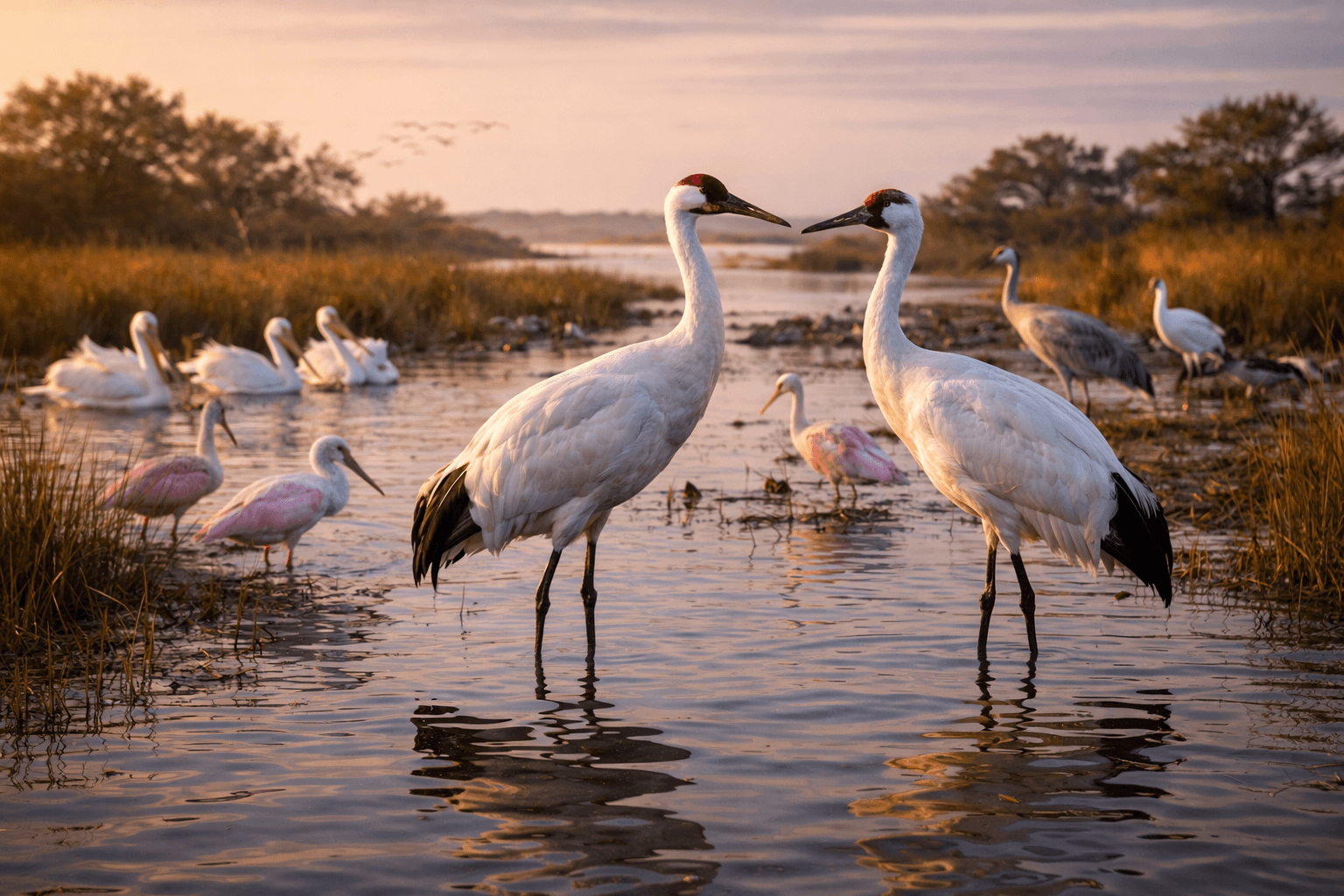
Lamar Peninsula Beach Road — The Magic Spot
If you’ve heard locals talk about watching cranes “walk across the road,” this is where it happens. Beach Road on the Lamar Peninsula runs along the shore of Aransas Bay and passes directly through feeding territory used by the crane families.
Pull your vehicle over slowly, kill the engine, and wait. In a good year, crane families will be feeding in the grass just roadside or wading in the shallows 10–20 feet from where you’re sitting. Stay inside your vehicle — it serves as a blind. Do not get out, do not make loud noise. If a crane approaches the road, stay still and let them cross.
This is wild, free, public birding at its finest. No fee, no tour, no reservation. Just you, a paved road, and the most endangered large bird in North America going about its morning.
Beach Road Access — Directions
- From Rockport: Take Highway 35 north toward Lamar
- Turn east onto Park Road 13 (you’ll see the Goose Island State Park signs)
- Then turn north on Lamar Beach Road and follow it along the shoreline
- Best crane area: The lake between 8th and 12th Streets — this is prime feeding territory. Slow down and scan both sides of the road
- Road surface: Paved throughout, with designated pull-off areas for parking
- Best time: Low tide, early morning, November–February
- Crowds: Weekdays are quieter; weekends in December–January can get busy
Every piece of land along Lamar Beach Road is private property. Texas has strong laws protecting landowners — trespassing is taken seriously and can result in criminal charges. Stay on the paved road and use the designated pull-offs only. Do not enter fields, cross fences, or step onto private land for any reason, including for a better photo. The road itself gives excellent viewing — you do not need to go further.
The Lamar Peninsula has alligators, and they are not small. These are large, wild animals capable of serious injury. Watch children and dogs closely at all times — keep both away from any water’s edge or tall grass along the road. Never approach an alligator, never feed one, and never assume one isn’t there just because you can’t see it.
Seasonal note: Alligators typically enter a dormant period after the first significant cold spell of winter and become active again around Easter. However, they are still commonly seen well into December — and any warm day in winter can bring them out. Do not assume cold weather means no alligators.
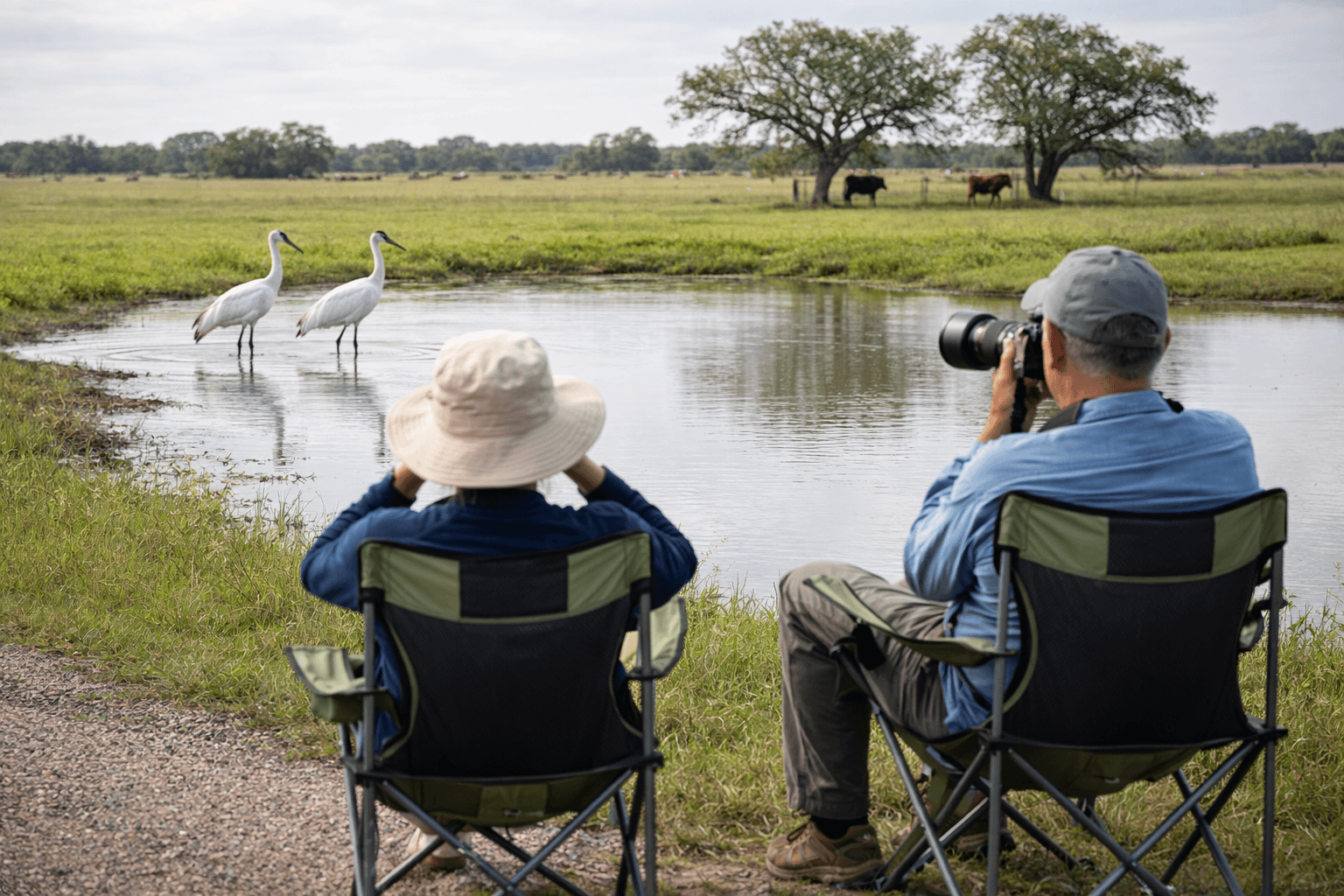
Tide Information — This Really Matters
Whooping cranes feed on blue crabs, clams, and other invertebrates in the tidal shallows. They are most visible and accessible during low tide, when the mud flats are exposed and the birds wade out into feeding areas near the road and viewing areas.
Check tide tables before your visit. NOAA provides free tide predictions for Port Aransas and Rockport stations. Aim for a visit window that includes low tide or the 2-hour window on either side of it. A high tide day can mean the cranes are dispersed far into the marsh, invisible from any road.
Local knowledge: incoming tides in the morning often concentrate cranes along shorelines as they follow the water’s edge hunting crabs pushed toward the grass.
Boat Tours — The Gold Standard Experience
For the absolute best crane viewing, book a boat tour from Rockport or Port Aransas. Operating October through April, these tours take you into Aransas Bay and get you within legal distance of the crane territories — views that are simply not possible from land.
Texas Birding Photos operates excellent Aransas Bay birding charters from Rockport with local captains who know exactly where the cranes will be based on tides and weather. Highly recommended by us.
Dress in layers — it is always windier on the water than it looks from shore, and boats leave early. Bring your longest lens. The cranes will be at distance even on a great boat tour.
Responsible Viewing Etiquette
Whooping cranes are protected by federal law under the Endangered Species Act. Harassing, disturbing, or approaching a whooping crane too closely is a federal violation with serious penalties. More importantly: these birds need every calorie they can find during their winter stay. Flushing a crane for a better photo costs that bird critical energy.
- Stay in your vehicle when cranes are near Beach Road
- Do not approach cranes on foot — 300 feet minimum distance on foot
- Do not make loud sounds, flash lights, or use drones near cranes
- If cranes appear alert or nervous, you are too close — back up
- Pull well off the road so other traffic can pass safely
- Report any harassment to USFWS: 1-800-TIPS-FWS
What to Bring
- Binoculars: 8x42 or 10x42 minimum — cranes can be distant
- Spotting scope: Excellent for beach road viewing; 20–60x zoom
- Camera: 500mm+ lens recommended for serious photography
- Layered clothing: Texas winter mornings can be 35–65°F
- Tide table: Download NOAA tides app before you go
- Water and snacks: You may wait a while — that’s okay
- Patience: The most important thing you can bring
Don’t Miss the Season — Get Arrival Alerts
We’ll email you when the first cranes land at Aransas and when the peak viewing window opens. Free, seasonal, and written by people who are out there watching.
Get Crane Arrival Alerts →